


Common Faults and How to Prevent Them
Biomass heating systems are built for longevity. When installed and maintained correctly, they provide stable, cost-effective renewable heat for commercial and rural properties across Scotland. That said, even the most reliable biomass boiler can develop faults over time.
In most cases, issues are not catastrophic failures. They are small mechanical or fuel-related problems that, if left unchecked, reduce efficiency and increase downtime. At Yarrow Energy, we regularly diagnose and resolve common biomass boiler faults before they escalate into expensive repairs.
Understanding the typical causes allows businesses to act early and protect performance.
Ignition and Fuel Feed Problems
One of the most frequent biomass boiler issues is ignition failure. If a system struggles to light or repeatedly aborts start-up cycles, the cause is often straightforward.
Ignition elements degrade gradually. After thousands of operating hours, they may fail to reach the temperature required to ignite pellets or chips. Damp or poor-quality fuel can also prevent successful combustion, even if the ignition system itself is functional.
Moisture content is critical. Pellets exposed to humidity swell and break down, producing inconsistent burn rates and ash build-up. Ensuring correct fuel storage, with dry, ventilated conditions, prevents many ignition problems before they arise.
Feed system faults are another common concern. Auger jams or inconsistent fuel delivery typically result from compacted pellets, foreign objects in the hopper, or dust accumulation within the feed mechanism. Regular hopper inspection and periodic cleaning significantly reduce the risk of unexpected stoppages.
A brief manual check can often prevent hours of operational downtime.
Combustion and Sensor Errors
Modern biomass boilers rely on calibrated sensors to maintain optimal combustion. Temperature probes, lambda sensors and flue gas analysers constantly monitor performance and adjust air-to-fuel ratios.
Over time, sensors can drift out of calibration. When this happens, the system may report inaccurate readings or adjust combustion incorrectly. The result is reduced efficiency, higher fuel consumption and increased emissions.
Warning signs include fluctuating operating temperatures, higher-than-normal ash output or repeated system alerts.
During servicing, we test flue gases, measure exhaust temperatures and verify oxygen levels to ensure clean combustion. Small calibration adjustments often restore full efficiency. Ignoring sensor drift, however, can lead to overheating, clinker formation or unnecessary wear on internal components.
Maintaining correct combustion protects both performance and component lifespan.
Ash Build-Up and Mechanical Wear
Ash accumulation is a natural by-product of biomass combustion. If ash removal systems are not operating correctly, deposits can restrict airflow and reduce heat exchange efficiency.
Heat exchangers coated in residue struggle to transfer energy effectively. This forces the boiler to work harder to achieve target temperatures, increasing fuel usage and mechanical strain.
Routine cleaning of combustion chambers, ash bins and flue pathways ensures airflow remains unobstructed. We also inspect seals, gaskets and refractory linings, replacing worn parts before they compromise system integrity.
Mechanical wear is gradual, not sudden. Proactive attention prevents avoidable failure.
Software and Control System Updates
Many commercial biomass boilers now operate with advanced digital control platforms. These systems regulate output, manage buffer tanks and integrate with wider building management systems.
Manufacturers periodically release firmware updates to improve operational logic, safety features and fault detection. If control software remains outdated, the system may not perform at its designed efficiency level.
As part of our maintenance process, we review control settings and install manufacturer updates where appropriate. This improves reliability and ensures the boiler complies with evolving safety standards.
Digital optimisation is as important as mechanical servicing.
The Value of Preventive Maintenance
The single most effective way to avoid biomass boiler faults is structured, annual professional servicing. Preventive maintenance costs a fraction of emergency call-outs and protects system longevity.
During a full service, our engineers:
- Clean combustion chambers and heat exchangers
- Inspect ignition elements and feed mechanisms
- Test flue gas composition and combustion efficiency
- Verify sensor calibration
- Replace worn seals and gaskets
- Review software and control settings
This systematic approach keeps the boiler operating at peak efficiency, reduces fuel waste and extends system life well beyond a decade.
Biomass remains a robust and dependable renewable heating solution. Most faults arise from minor maintenance gaps rather than design flaws. With proper care, a commercial biomass system can continue delivering stable, low-carbon heat for many years.
If your boiler is showing warning signs or simply due its annual inspection, our engineering team can assess performance and restore confidence before issues develop further.
FAQS
- 1
Q1: My boiler won’t ignite, what should I check first?
Confirm pellets are dry and the ignition element glows.
- 2
Q2: How do I know if my auger is blocked?
Listen for grinding noises or irregular feed patterns.
- 3
Q3: Can software updates really help?
Yes, updates often fix minor bugs and improve efficiency.
- 4
Q4: Do you service all brands?
We’re trained across multiple manufacturers operating in Scotland.
Preventive Maintenance
Even reliable biomass systems can develop quirks. Common faults include ignition failure, auger jams, and sensor drift. Most stem from simple causes dusty sensors or damp fuel.
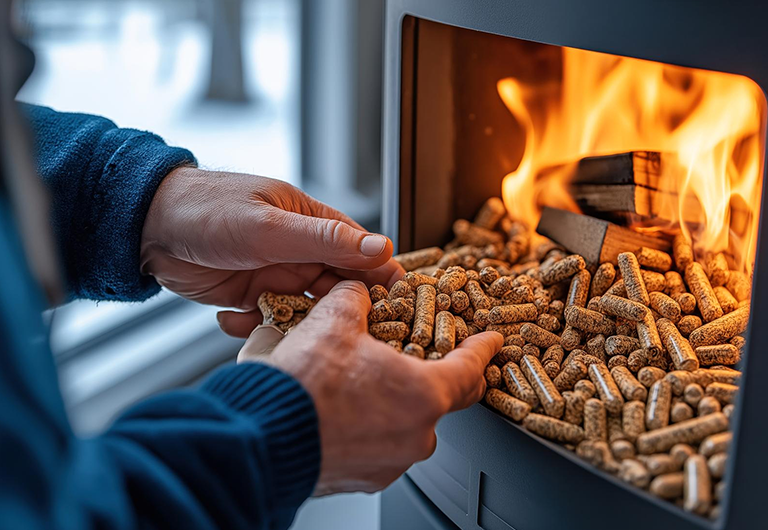
Preventing faults is cheaper and cleaner than repairing them. Regular servicing keeps your biomass boiler burning efficiently and your home comfortably warm all winter.