


Discover how choosing the right biomass fuel can improve efficiency, reduce heating costs and keep your boiler performing at its best.
Why Fuel Quality Matters
Fuel is the heart of any biomass system. The right choice keeps your boiler efficient, reliable, and clean-burning. Poor-quality fuel leads to clogs, smoke, and wasted energy. At Yarrow Energy, we’ve seen the difference first-hand between premium wood pellets and inconsistent alternatives.
Pellets vs Chips vs Logs
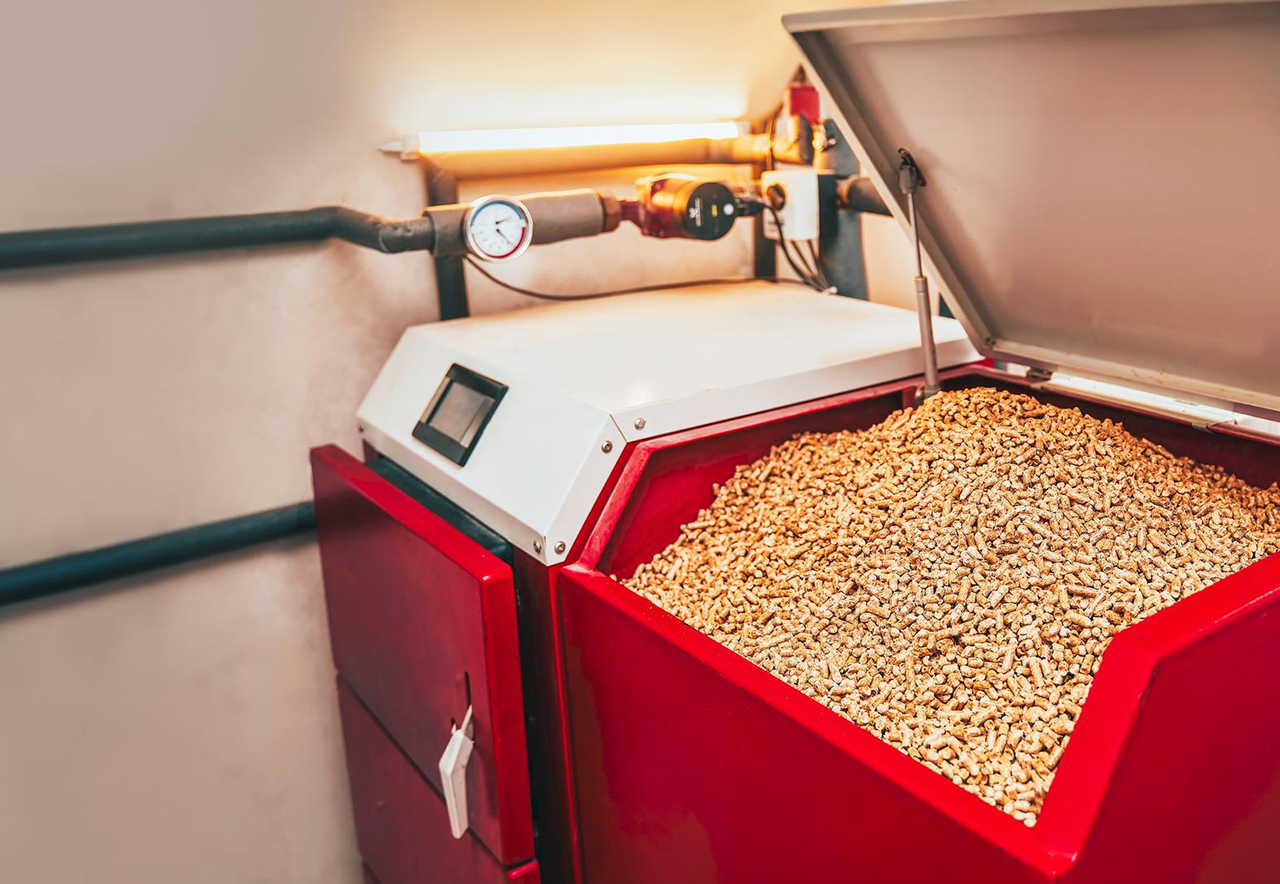
Wood pellets are compact, uniform, and easy to handle. They burn cleanly and produce minimal ash, making them the preferred option for most domestic boilers. Wood chips are cheaper per tonne but contain more moisture, so they suit larger, commercial boilers with stronger feed systems. Logs work well in manually fed units but need dry storage and regular refuelling.
Understanding Moisture Content
Fuel moisture is the biggest factor in performance. Pellets should contain less than 10 percent moisture. Damp fuel lowers combustion temperature and increases soot deposits. We always recommend buying from ENplus-certified suppliers, ensuring your pellets meet strict quality standards.
Storage and Handling
Store your fuel in a dry, ventilated area. Dampness is the enemy of efficiency. Automatic feed systems help reduce exposure to moisture, delivering consistent combustion. We can design and install integrated hoppers that suit your property and usage.
Environmental Impact
Choosing the right fuel isn’t just about savings, it’s about sustainability. Locally sourced pellets reduce transport emissions and support forestry jobs across Scotland. We work only with certified suppliers who meet rigorous environmental criteria.
Heating Smarter, Not Harder
Every kilogram of good-quality fuel produces more heat and less waste. By paying attention to sourcing and storage, you’ll see lower bills, cleaner operation, and a smaller carbon footprint — all from a simple, thoughtful choice.
Not all biomass fuel is produced to the same standard. While lower-cost options may seem attractive, inconsistent pellet size, higher moisture levels or increased dust content can reduce your boiler's efficiency and lead to unnecessary maintenance. Working with a trusted supplier gives you confidence that every delivery meets recognised quality standards and performs consistently throughout the heating season. Investing a little more in higher-quality fuel often results in lower running costs over time, fewer service issues and improved overall system reliability.
When comparing fuel prices, it's important to consider the total cost of ownership rather than simply the price per tonne. High-quality biomass fuel produces more usable heat, generates less ash and reduces wear on internal components, meaning less frequent cleaning and fewer repairs. Combined with regular servicing and correct system settings, choosing the right fuel can help maximise the return on your biomass heating investment for many years. A well-maintained biomass boiler fuelled correctly can provide dependable, efficient heating while keeping energy costs predictable and under control.
FAQS
- 1
Q1: Can I mix fuel types?
No, always stick to the fuel type your boiler is designed for.
- 2
Q2: How long does a tonne of pellets last?
Around 4–6 weeks for an average household in winter.
- 3
Q3: What happens if my pellets get damp?
They can swell and jam the feed auger, causing system faults.
- 4
Q4: Is locally sourced fuel better?
Yes, it supports local jobs and cuts transport-related emissions.
Whether you're installing a new biomass boiler or looking to improve the performance of your existing system, Yarrow Energy can help. From expert advice on fuel selection to professional installation, servicing and ongoing maintenance, our experienced team is here to ensure your biomass heating system delivers maximum efficiency, reliability and long-term savings. Contact us today to discuss the best solution for your home or business.