


Discover how solid fuel warm air heating provides fast, cost-effective commercial heating for warehouses, workshops, and industrial buildings across Scotland.
Heating a large commercial workspace isn’t the same as heating a home.
High ceilings, large air volumes, frequent door openings, and constant airflow all work against you.
That’s why many standard heating systems struggle to keep temperatures stable or become expensive to run.
For warehouses, workshops, agricultural sheds, and industrial units, the requirement is usually very clear:
Fast heat delivery, reliable output, and sensible long-term running costs.
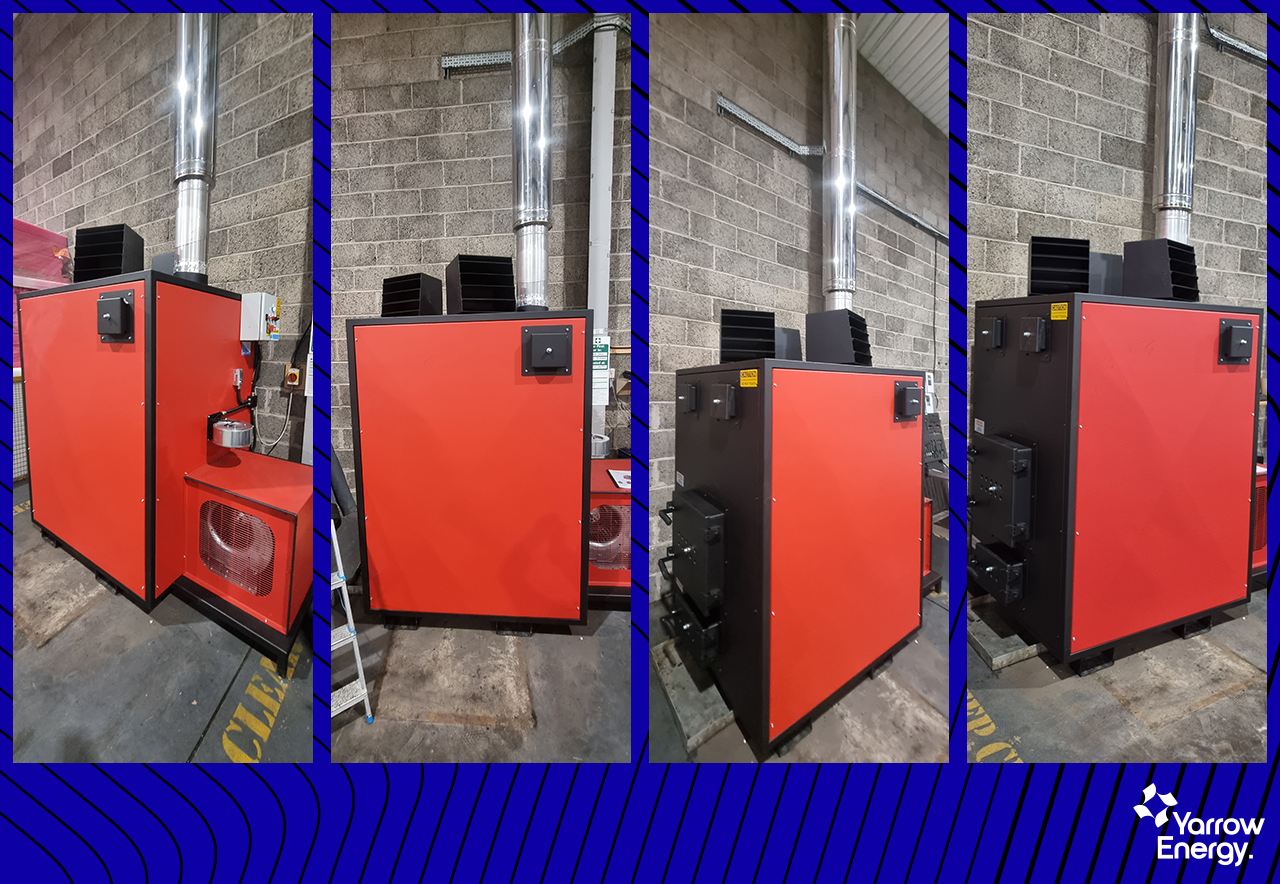
Recent Install: Solid Fuel Warm Air Heating in Stirling
We recently completed a commercial warm air heating installation in Stirling, fitting a solid fuel warm air blower boiler designed specifically for heating large workspaces.
This type of system is particularly well suited to commercial buildings where rapid heat-up and strong air distribution are essential.
In this case, the client needed a solution that could:
- Heat the space quickly at the start of the working day
- Distribute warm air evenly across a large footprint
- Avoid relying solely on high-cost electric or fossil fuel heating
A solid fuel warm air system delivered exactly that.
How Solid Fuel Warm Air Heating Works
Solid fuel warm air heating systems burn approved solid fuels such as:
- Waste wood
- Timber offcuts
- Wood residues
- Approved biomass fuel
The heat generated in the boiler is transferred into a warm air blower system, which then distributes heated air evenly throughout the building.
In practical terms:
- Heat is generated in the boiler
- Warm air is pushed directly into the workspace
- The space heats up quickly and remains usable
This approach is especially effective in buildings where traditional wet heating systems or radiant heating struggle to deliver consistent comfort.
Why Warm Air Heating Suits Large Commercial Buildings
Large workspaces lose heat quickly. Opening doors, vehicle movements, and high ceilings all contribute to rapid heat loss.
Warm air systems respond well to this environment because they focus on delivering usable heat where people are working, rather than slowly warming large volumes of structure.
Key advantages include:
- Rapid response times
- Strong air circulation across large areas
- Simple, robust system design
- Effective heating even in challenging building layouts
For many industrial and agricultural settings, it’s a practical and dependable solution.
Why Solid Fuel Commercial Heating Makes Sense
For many businesses, the real value lies in efficiency and sustainability.
A solid fuel warm air heating system can:
- Reduce ongoing heating costs
- Improve comfort for staff
- Reuse waste wood, turning a disposal issue into usable energy
- Reduce reliance on oil, gas, or electric heating
- Support a more sustainable heating strategy
In the right setting, it’s one of the most cost-effective ways to heat a large commercial workspace while cutting waste and improving control over fuel costs.
Commercial Heating Systems Designed Around Your Building
Every commercial building behaves differently. That’s why effective heating starts with proper system design, not just equipment selection.
When designing commercial heating solutions, we look at:
- Required heat output
- Building size and heat-loss characteristics
- Operating hours and usage patterns
- Fuel availability
- Long-term running and maintenance costs
The result is a system that works with the building, not against it.
Commercial Heating Installers You Can Rely On
If you’re looking for commercial heating installers in Scotland, whether for a warehouse, workshop, or industrial unit, solid fuel warm air heating is well worth considering.
If you have access to waste wood or biomass fuel and need a powerful, reliable heating solution for a large space, it’s a practical option that delivers real-world benefits.
FAQS
- 1
What types of buildings suit warm air heating systems?
Warehouses, workshops, agricultural buildings, and industrial units with large open spaces benefit most.
- 2
Is solid fuel heating suitable for commercial use?
Yes. When correctly designed and installed, solid fuel systems are well suited to commercial environments and high heat demands.
- 3
Can waste wood be used as fuel?
Approved waste wood and timber residues can often be used, helping reduce fuel costs and waste.
- 4
Is warm air heating expensive to run?
Running costs depend on fuel choice and system design, but solid fuel systems can be significantly more cost-effective than electric or oil heating in large spaces.
Heating large commercial spaces
Warehouses, workshops, and industrial buildings demand heating systems that deliver fast, reliable warmth without runaway energy costs. This insight looks at solid fuel warm air heating and why it works so well for large commercial environments in Scotland.
If you’re exploring commercial heating options for a large workspace, solid fuel warm air heating is worth a closer look.